

Key Takeaways
- Technical SEO underpins both site visibility and user experience, creating the conditions for websites to perform consistently at their best regardless of changes in user behavior or search engine updates.
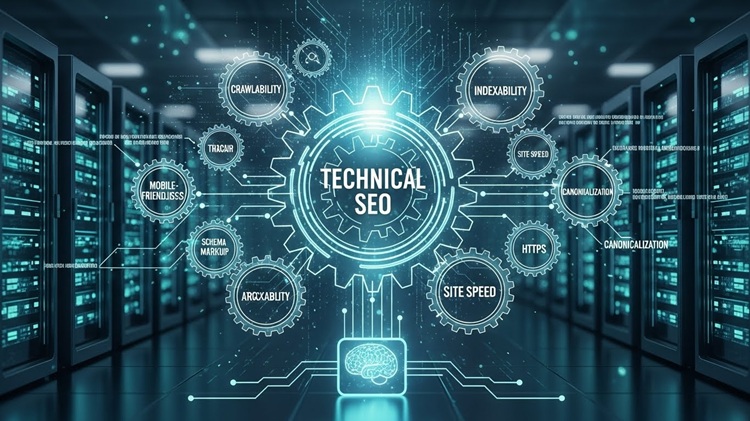
- Fundamental elements like site speed, mobile-friendliness, structured data markup, and strong security practices are at the heart of every successful technical SEO strategy.
- Routine technical audits are the cornerstone of healthy, responsive websites, helping them adapt to shifting search trends and algorithm updates with minimal disruption.
In today’s highly competitive digital landscape, standing out among millions of websites ultimately comes down to two essentials: achieving maximum visibility in search results and delivering a seamless, gratifying user experience every time someone visits your site. Victorious is among the forward-thinking agencies that empower brands to rise above the competition by leveraging technical SEO. By digging into the very foundation and underlying mechanics of your website, technical SEO ensures your web pages are not only discoverable but also easily accessible and interpretable, enabling both users and search engines to extract the most value from your content, products, and services. Website performance is no longer just about aesthetics or basic content quality; it’s about how well your site performs at a technical level in real-world scenarios.
As more users rely on mobile devices to search and interact with brands online, Google’s ranking algorithms have rapidly evolved to prioritize not just keyword relevance but also website speed, mobile responsiveness, and robust security protocols. These ranking factors don’t just lift your site in search results they are directly tied to how visitors experience and engage with your content, influencing bounce rates, time on page, and overall satisfaction. By focusing on technical SEO, brands can reduce costly friction points, retain more visitors, and create the foundations for long-term online success and scalability in an ever-changing web environment.
Understanding Technical SEO
Technical SEO deals with the backend elements of your site that, while often invisible to ordinary users, are absolutely crucial for determining how search engines crawl, index, and rank your pages. Unlike on-page SEO, which emphasizes content, and off-page SEO, which centers on backlinks, technical SEO focuses on fine-tuning your website’s performance, architecture, and infrastructure. This focus ensures your website is fully optimized for both the sophisticated algorithms of search engines and for the smoothest possible experience for human visitors who expect speed and usability.
When your website’s structure is clean and well-optimized, search engines can easily access, interpret, and catalog your content. This clarity leads to better rankings, an influx of organic traffic, and a vastly improved user journey from landing to conversion. Core areas to address in technical SEO include improving crawlability with well-organized sitemaps, fixing internal linking issues that can fragment your authority, and eliminating duplicate content that might confuse search bots or dilute your site’s relevance. For a comprehensive introduction, Google’s own SEO Starter Guide is invaluable for anyone seeking to lay the right technical foundations and ensure sustained visibility.

Site Speed and Performance
A slow website is one of the fastest ways to frustrate visitors, drive them away before they ever engage, and fall out of favor with search engines. Google has stated unequivocally that site speed is a key ranking factor, particularly for mobile searches, because loading times heavily influence user satisfaction and retention. In a world where attention spans are measured in seconds, users expect near-instant access. Even delays as brief as two to three seconds can cause a dramatic rise in bounce rates, leading to lost leads, fewer conversions, and diminished revenue potential.
Enhancing site speed begins with optimizing large elements like images and videos, minifying bulky CSS and JavaScript files that slow down rendering, and leveraging browser caching so returning visitors don’t need to reload every resource from scratch. Using diagnostic tools such as Google’s PageSpeed Insights can quickly identify bottlenecks and point to high-impact fixes, helping site owners focus their resources where they matter most. Regular speed audits are critical as your site grows, ensuring that new features or content don’t inadvertently degrade the user experience or sabotage your search engine rankings.
Mobile Responsiveness
With mobile-first indexing now the industry standard, it’s essential to deliver exceptional web experiences across every device. Responsive web design ensures your site automatically adapts to various screen sizes and orientations, looking and functioning perfectly on everything from high-resolution desktop monitors to compact smartphones and tablets. This dramatically increases the chances that users will stay longer, interact with your content, and ultimately convert regardless of how they access your site.
Mobile-friendliness is much more than simply shrinking content to fit a smaller screen. It involves optimizing navigation so menus are easy to use with touch, ensuring text is legible without zooming, and making sure buttons and calls-to-action are appropriately spaced and don’t disrupt usability. Pop-ups and interstitials must be unobtrusive, as intrusive elements can hurt both rankings and user satisfaction. Focusing on mobile optimization positions your site to succeed not just with today’s users but also with future audiences as mobile browsing and search continue to grow globally.
Structured Data and Schema Markup
Implementing structured data via schema markup enables search engines to interpret and display your content in the most relevant, engaging ways. By tagging your content with schema, you help search engines generate rich snippets and visual enhancements, such as review stars, event dates, and product images, that make your listings stand out and improve click-through rates. These enriched search results often deliver higher-quality traffic because they provide users with key information before they even click through, setting clear expectations.
Schema markup isn’t an exclusive tool for large organizations or e-commerce platforms. Any website, including blogs and small business sites, can leverage structured data to define everything from articles and author bios to videos and FAQs. Doing this helps search bots understand the specific context of each page, reducing ambiguity and increasing the likelihood of prominent placement in features such as knowledge panels or carousels. Schema.org is a collaborative initiative that provides a collection of shared vocabularies that webmasters can use to mark up their pages in ways that are understood by major search engines.
Regular Technical Audits
Regular technical SEO audits are the bedrock of maintaining a healthy website over the long term. These systematic evaluations scan for hidden or emerging issues such as crawl errors, misconfigured redirects, broken links, and duplicate content, each of which can quietly undermine your traffic, weaken your site authority, or even result in search engine penalties if left unchecked.
Modern SEO tools and professional services streamline the complete audit process, scanning your entire website and delivering clear, prioritized recommendations for fixes. Addressing these findings quickly helps ensure your site remains not only fast and accessible but also primed for exponential growth. Proactive audits let your business adapt nimbly as search algorithms update, user expectations evolve, and new competitors enter the market, safeguarding your digital assets and reputation along the way.
Security and HTTPS
A secure website is foundational to building user confidence and signaling trust to search engines. Migrating from HTTP to HTTPS encrypts every transmission, protecting customer data and interactions from interception or tampering. Google has openly stated its preference for secure websites, even offering a slight ranking boost to those who prioritize HTTPS, making it a non-negotiable aspect of technical SEO best practices.
However, security isn’t just about SSL certificates; it also means routinely updating your site’s software, installing safe, reputable plugins, and maintaining strong, company-wide password policies. These steps are crucial for defending against common vulnerabilities, blocking malicious attacks, and preserving public confidence in your brand, all of which can impact your SEO performance and long-term business success.
Conclusion
Technical SEO is an indispensable and often underestimated part of a successful digital strategy. By going beyond keywords and backlinks to emphasize site speed, mobile responsiveness, structured data markup, regular audits, and robust security measures, you’re not just improving search engine rankings you’re optimizing the entire digital experience for both users and search bots, building trust, and positioning your website for sustainable growth and innovation. As the web continues to evolve, investing in technical SEO will remain a crucial differentiator between sites that simply exist and those that truly thrive online.